


Have you ever dreamed of playing the piano but wondered whether it’s too late to start? Maybe you took lessons years ago and want to get back into playing, or perhaps you’re a complete beginner ready to try something new. Whatever your starting point, learning piano as an adult can be a rewarding experience!
One of the most common questions adult piano students ask is, “How can I get better at playing?” The good news is that improving at piano doesn’t require hours of practice every day or a natural musical talent. With consistency, patience, and a few intentional habits, you can build your skills and enjoy the process along the way.
At 232 Music Studios, we believe music is for everyone, at every stage of life. Here are five practical tips to help you improve at piano as an adult.
1. Practice a Little at a Time
When you’re balancing work, family, and other responsibilities, finding time to practice piano can feel challenging. It’s tempting to think you need an entire hour of uninterrupted practice to make progress, but that’s not necessarily the case!
Short, focused practice sessions can be a great way to build consistency. Even 10–15 minutes of intentional practice can help you reinforce what you’ve learned and become more comfortable with your instrument.
The key is to create a routine that fits your life. You might practice before starting your workday, during a lunch break, or in the evening when things quiet down. Choose a time that feels realistic, and try to make it a regular part of your week.
Remember, consistency matters more than trying to fit all your practice into one long session. Small steps add up over time!
Try this: Set a timer for 10 minutes and choose one specific thing to work on. When your time is up, celebrate showing up for yourself and your music.
2. Slow It Down Before Speeding It Up
It’s natural to want to play a new song at its intended tempo as soon as possible. However, one of the best ways to improve your piano playing is to slow things down!
When you practice a challenging passage too quickly, it’s easy to repeat mistakes without realizing it. Playing slowly gives your brain and fingers more time to process the notes, coordinate your movements, and develop accuracy.
Once you can play a section correctly at a comfortable speed, gradually increase the tempo. You’ll often find that taking your time in the beginning helps you learn more efficiently in the long run.
It’s also helpful to break a song into smaller sections rather than trying to master the entire piece at once. Focus on a few measures, work through the difficult parts, and then gradually connect everything together.
Try this: Choose a section of your current song that feels difficult. Play it slowly until you can move through the notes comfortably before increasing your speed.
Learning piano is a journey, and having clear goals can help you stay motivated along the way.
3. Set Small, Achievable Goals
Learning piano is a journey, and having clear goals can help you stay motivated along the way. Instead of focusing only on the big picture, break your progress into smaller milestones that give you something specific to work toward.
For example, your goals might include learning a new song, improving your hand coordination, becoming more comfortable reading music, or playing a familiar piece without stopping.
Small goals help you recognize progress that might otherwise go unnoticed. You may not master an entire song in one week, but learning a challenging section or playing a passage more confidently is still a meaningful accomplishment!
It’s also important to remember that every student progresses differently. Comparing your journey to someone else’s can take away from the joy of learning. Focus on your own goals and celebrate the improvements you make along the way.
Try this: At the beginning of each week, write down one piano goal you’d like to accomplish. At the end of the week, take a moment to reflect on what you’ve learned and decide what you’d like to work on next.
4. Repeat the Tricky Parts Instead of Starting Over
Have you ever made a mistake halfway through a song and felt the urge to start from the beginning? We’ve all been there!
While playing a song from beginning to end can be helpful, repeatedly starting over may not give you enough time to work through the sections that need the most attention.
Instead, identify the specific measures or transitions that are giving you trouble. Practice those sections separately until they become more comfortable, then gradually work them back into the full song.
You can also experiment with practicing each hand separately before putting both hands together. This allows you to focus on the notes and movements without trying to manage everything at once.
Most importantly, remember that mistakes are a normal part of learning. They help you identify what needs attention and give you a clear direction for your next practice session.
Try this: The next time you make a mistake, pause and identify what happened. Is there a tricky fingering, an unfamiliar chord, or a rhythm that needs more attention? Work on that specific spot before playing the whole section again.
5. Celebrate Your Progress and Enjoy the Process
Improving at piano isn’t just about playing faster, learning harder songs, or reaching a particular skill level. It’s also about enjoying music, challenging yourself, and discovering what you’re capable of doing.
As an adult, you may have different goals and motivations than you would have had as a child. Maybe you want to play your favorite songs, explore a creative hobby, challenge your brain, or simply make more time for something you love.
Whatever your reason for learning, give yourself permission to enjoy the experience without expecting perfection.
Take time to notice how far you’ve come. A song that once felt impossible may eventually become one you can play with confidence. A musical concept that seemed confusing may suddenly click. These little breakthroughs are worth celebrating!
And if you have a difficult practice day, don’t let it discourage you. Progress isn’t always a straight line. Sometimes the most important thing you can do is keep showing up, stay patient, and remember why you wanted to learn in the first place.
Try this: Keep a list of the songs you’ve learned or the skills you’ve improved. Looking back at your progress can be a wonderful reminder of how much you’ve accomplished.
It’s Never Too Late to Start Playing Piano
You don’t have to be a natural musician or dedicate hours every day to become a better piano player. By practicing consistently, slowing down when you need to, setting achievable goals, working through difficult sections, and celebrating your progress, you can build your skills one step at a time.
Most importantly, remember that learning piano should be something you look forward to. Give yourself room to grow, enjoy the music you make, and take pride in every step of your journey.
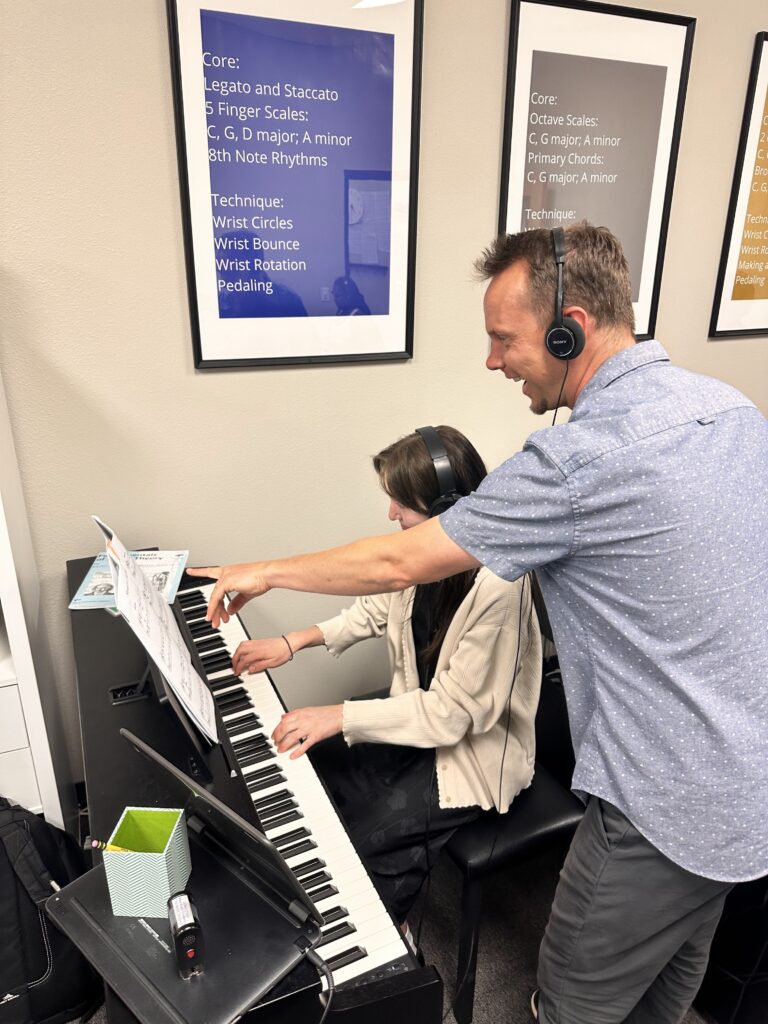
Ready to start your piano journey?
At 232 Music Studios in Colorado Springs, we believe it’s never too late to discover the joy of playing piano. Whether you’re starting from scratch or picking up where you left off, we’d love to help you get started!
Book an adult intro piano lesson for just $29.99 and take the first step toward learning something new.
Visit 232musicstudios.com to get started!
Growing Musicians Together!


